
Shoulder Pain - Can Exercise Help? Evidence-Based Ways to Reduce Pain and Improve Movement
Shoulder pain is one of the most common musculoskeletal problems affecting adults of all ages. Whether it develops after an injury, repetitive work, sport, or simply over time, shoulder pain can make everyday activities surprisingly difficult. Reaching into a cupboard, fastening a seatbelt, lifting shopping bags, getting dressed, or even sleeping comfortably can all become painful challenges.
The good news is that, for many people, exercise is one of the most effective non-surgical treatments available.
Modern research consistently shows that the right exercises can reduce pain, improve strength, restore movement, and help people return to the activities they enjoy. The key is not simply exercising more—but performing the right exercises, progressing gradually, and remaining consistent.
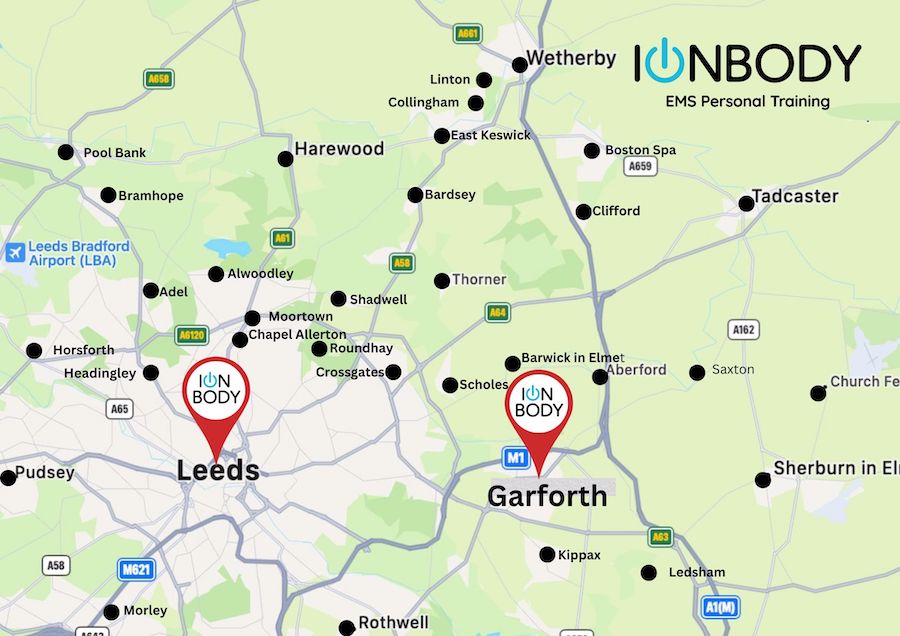
At ION BODY, we help people throughout Garforth (LS25), Leeds (LS1), and the surrounding areas improve strength, mobility, confidence, and overall health through evidence-based exercise, EMS training, group exercise classes, and recovery sessions.
Why Does Shoulder Pain Develop?
The shoulder is the most mobile joint in the human body, allowing movement in almost every direction. This incredible mobility also makes it one of the least stable joints, relying heavily on muscles, tendons, and ligaments for support.
Common causes of shoulder pain include:
- Rotator cuff-related pain
- Subacromial pain syndrome (often called shoulder impingement)
- Muscle weakness
- Poor posture
- Reduced shoulder mobility
- Repetitive overhead movements
- Age-related tendon changes
- Reduced physical activity
In many cases, the pain isn’t caused by one single injury but develops gradually as the muscles around the shoulder become weaker, less coordinated, or overloaded.
Can Exercise Help Shoulder Pain?
For many people, the answer is yes.
Exercise-based rehabilitation is now widely recommended as one of the first treatments for many common shoulder conditions.
A large systematic review published in the British Journal of Sports Medicine, analysing almost 200 clinical trials, found that structured exercise programmes significantly reduced pain compared with no exercise. Even more importantly, specific shoulder exercises produced better results than general exercise programmes, highlighting that targeted rehabilitation is far more effective than simply keeping active.
This is encouraging because it means many people can improve without surgery or relying solely on medication.
Why Strength Matters
The shoulder depends on a group of muscles known as the rotator cuff, together with the muscles surrounding the shoulder blade (scapula), to keep the joint stable during movement.
When these muscles become weak or poorly coordinated, extra stress is placed on the tendons and surrounding tissues, often leading to discomfort during lifting, reaching, or carrying.
Progressive strengthening helps restore this support system.
Research published in the Journal of Orthopaedic & Sports Physical Therapy found that motor-control exercise programmes—which focus on improving shoulder movement patterns as well as strength—produced better improvements in disability than general exercise programmes in people with rotator cuff-related shoulder pain.
This demonstrates that how you exercise is just as important as how much you exercise.
The Importance of Shoulder Blade Strength
Many people think shoulder pain only comes from the shoulder itself.
In reality, the shoulder blade provides the foundation for almost every arm movement.
When the muscles around the shoulder blade become weak or fail to work together efficiently, unnecessary stress can be placed on the shoulder joint.
A 2024 systematic review published in Frontiers in Neurology found that scapular stabilisation exercises significantly improved both pain and shoulder function compared with conventional physiotherapy approaches.
These exercises help strengthen muscles such as the:
- Lower trapezius
- Serratus anterior
- Rhomboids
- Middle trapezius
Together, these muscles improve posture, shoulder stability, and movement efficiency.
Supervised Exercise Makes a Difference
One of the biggest predictors of success isn’t necessarily finding the “perfect” exercise.
It’s actually doing the programme consistently.
Research published in the Archives of Physical Medicine and Rehabilitation found that supervised strengthening programmes produced greater improvements in pain and function than no supervised exercise.
Having guidance ensures that exercises are:
- performed correctly
- progressed safely
- adapted to individual ability
- continued long enough to see meaningful improvements
Consistency almost always beats intensity.
More Exercise Isn’t Always Better
One of the most interesting findings from recent research is that doing more exercises doesn’t automatically produce better outcomes.
The large GRASP Trial, involving over 700 participants, found that a simple programme combined with good education produced similar long-term outcomes to much larger supervised exercise programmes.
Likewise, the SExSI Trial found that adding a very high volume of shoulder strengthening exercises did not outperform standard rehabilitation.
The message is reassuring:
You don’t need dozens of complicated exercises.
You need the right exercises, performed consistently and progressed appropriately.
Looking After Your Shoulders Every Day
Keeping your shoulders healthy involves much more than rehabilitation alone.
Simple daily habits can make a significant difference:
- Stay physically active.
- Strengthen your upper back and shoulders regularly.
- Avoid remaining in one position for long periods.
- Improve posture through regular movement.
- Build strength gradually.
- Don’t ignore persistent pain.
The stronger and more resilient your shoulder muscles become, the better they are able to support everyday movement.
Shoulder Pain Support in Garforth and Leeds
At ION BODY, our approach isn’t simply about treating painful shoulders.
We focus on helping people move with greater confidence by improving overall strength, posture, stability, and movement quality.
Our programmes may include:
- Evidence-based strength training
- Group exercise classes
- EMS training
- Functional movement coaching
- Recovery sessions
- Progressive exercise programmes designed around individual ability
Whether your goal is reducing shoulder pain, improving mobility, or returning to exercise safely, building strength is often one of the most effective long-term solutions.
Take the Next Step
Shoulder pain doesn’t always mean you need to stop moving.
In fact, the scientific evidence increasingly shows that appropriate, progressive exercise is one of the most effective treatments for many common shoulder conditions.
Building stronger muscles, improving shoulder control, and staying consistent can help reduce pain, restore function, and improve your quality of life.
If you’re looking for ways to improve shoulder strength and movement in Garforth, Leeds, or the surrounding areas, structured exercise could be the first step towards moving more comfortably again.
References (Studies)
- British Journal of Sports Medicine: Systematic review and meta-analysis showing targeted exercise is more effective than no exercise and more effective than generic exercise for shoulder impingement.
- Journal of Orthopaedic & Sports Physical Therapy (2024): Systematic review and meta-analysis (22 RCTs, 1,281 participants) showing motor-control exercise improves disability in rotator cuff-related shoulder pain.
- Frontiers in Neurology (2024): Systematic review and meta-analysis (8 RCTs, 387 participants) demonstrating scapular stabilisation exercises improve pain and shoulder function.
- Archives of Physical Medicine and Rehabilitation (2021): Meta-analysis showing supervised strengthening programmes improve pain and function compared with no training.
- The Lancet – GRASP Trial: Multicentre randomised controlled trial (708 participants) showing high-quality advice with targeted exercise achieves similar long-term outcomes to intensive supervised programmes.
- SExSI Trial: Pragmatic randomised controlled trial demonstrating that very high-dose strengthening programmes were not superior to standard exercise-based rehabilitation.
find us at
PHONE NUMBER
07512 769315
LOCATION 1
EMS 1-to-1, 2-to-1, Ice Bath & Group Exercise
Garforth Leeds Studio:
7 Long Meadowgate,
Leeds,
LS25 2BX
LOCATION 2
EMS 1-to-1
Leeds Centre Studio:
12 Park Place,
Leeds,
LS1 2RU